


























Belts: Essential Components of Conveyor Systems



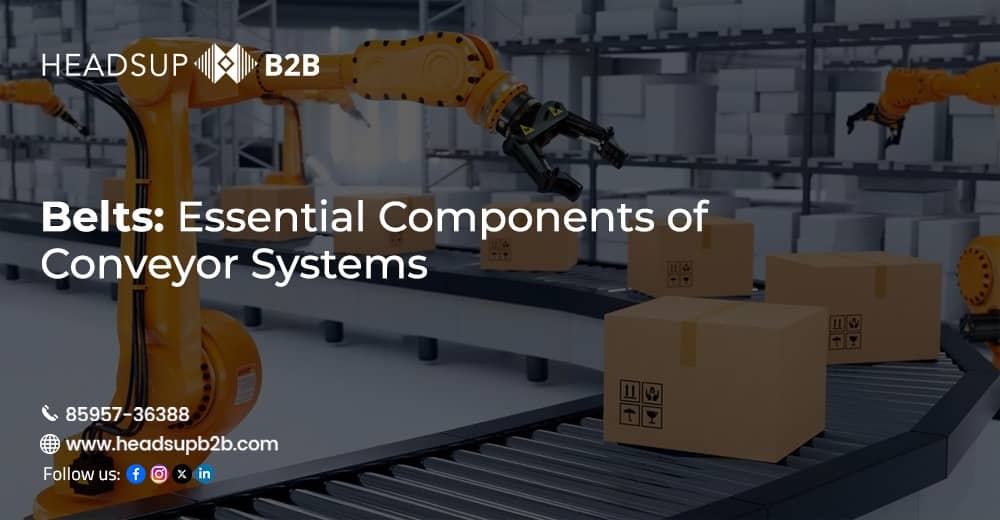
Every day, millions of tonnes of raw materials and finished goods flow from one point to another inside manufacturing facilities worldwide. While these goods may be transported over short or long distances, there’s no denying that they all rely on one common piece of equipment – industrial conveyor belts. But what makes them so critical? And why should manufacturers invest their time and resources into upgrading their existing systems or purchasing new ones? This blog post is going to answer these questions and it gives information about industrial conveyor belts, their use in modern manufacturing operations, and so on.
Understanding Industrial Conveyor Belts
Industrial conveyor belts are diverse, and tailored for specific applications and environments. Here’s a breakdown:
-
Flat belts (tension belts): These handle horizontal movement well, commonly used in mining and quarrying for transporting heavy materials.
-
Chain belts: Featuring metal chains on rubber surfaces, they excel at carrying heavier loads at higher speeds without wearing out quickly.
-
Flexible conveyor belts: These adapt to uneven surfaces and different widths, frequently found in the packaging, food processing, and pharmaceutical industries.
-
Polyurethane conveyor belts: Offering excellent abrasion resistance and flexibility, they’re preferred in the chemical and sanitary conveyance industries.
Understanding these distinctions helps manufacturers choose the most suitable belt for their needs.
Benefits of Using Industrial Conveyor Belts
When designing and implementing conveyor systems, several variables must be considered:
-
Operating Speed: This varies based on the product and its destination.
-
Capacity: Refers to the maximum volume of goods a conveyor can handle at once. Selecting appropriately sized belts ensures smooth integration with existing operations.
-
Material Type and Weight: Knowing the exact materials being carried allows engineers to choose the right combination of belt thickness, strength, and loading capacity.
-
Environmental Conditions: Factors such as temperature changes, moisture exposure, and dust accumulation must be considered during the design phase.
-
Safety Standards: Compliance requires protective features like covers and guardrails to prevent accidents caused by foreign objects entering the conveyor or employees interacting with moving parts.
Investing in thorough research upfront leads to increased productivity, reduced downtime, and lower maintenance costs in the long run.
Importance of Quality Control and Maintenance Practices
Quality control is an important factor in preserving industrial conveyor belts’ durability and dependability. Routinely checking and testing equipment allows operators to identify flaws early on. This prevents delays and unnecessary costs caused by repairs. The cleaning and maintenance schedule is an integral part of mitigating wear and tear from soiling, dust, and dirt, as well as buildup from the trash. Proper alignment means that the belt travels along a straight line, which reduces friction, consumes less energy, and extends the belt’s life.
Select suppliers with rigorous quality controls to guarantee superior performance and exceptional customer service throughout your system’s lifespan. Continuous monitoring aids in identifying potential issues in advance, ensuring timely resolution, and ultimately enhancing productivity.
Staying Ahead: The Strategic Importance of Investing in Advanced Industrial Conveyor Belts Technology
Manufacturing units striving for a competitive edge cannot afford to ignore developments in conveyor belt innovation. Thus, they must invest strategically in this technology as it continues to evolve. Working with dependable vendors proficient in delivering state-of-the-art industrial conveyor belts brings numerous benefits to companies. It enables them to remain successful even during times of constant economic adjustment. Headsup B2B is your reliable partner for connecting with suppliers who understand the importance of reliable belts and accessories. Contact us now to explore the benefits of our extensive partner network and exceptional customer service.
Share
