


























Best Pipes for Plumbing in India: CPVC vs UPVC vs PPR vs GI vs HDPE






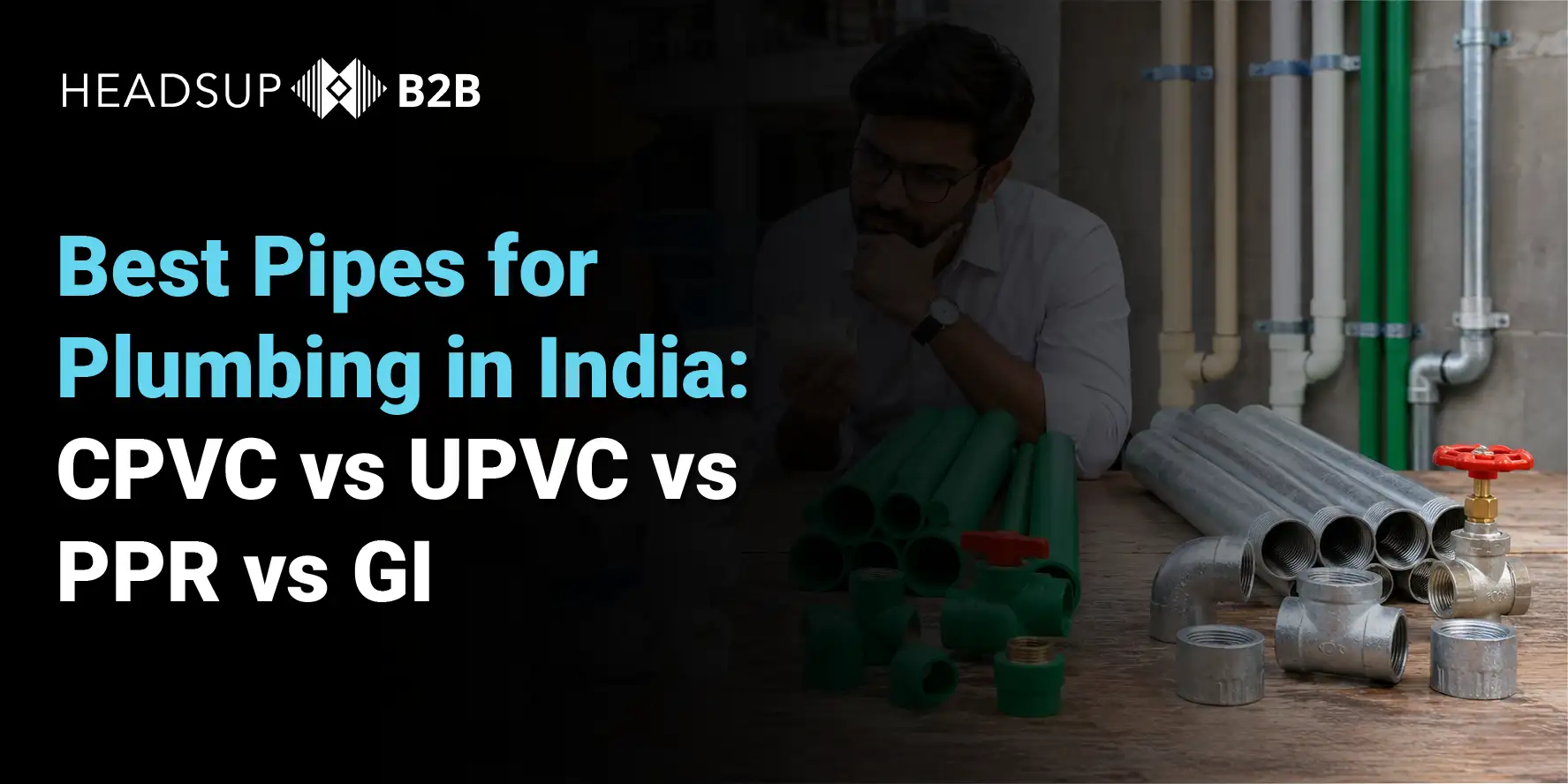
There is no single best pipe. This guide compares CPVC, UPVC, PPR, GI and HDPE by hot-water rating, Indian Standard and use — and shows which pipe to use where in a building.
Source: BIS standards IS 15778, IS 4985, IS 13592; manufacturer technical data.
WHAT THIS GUIDE COVERS
- Types of plumbing pipes used in India
- CPVC vs UPVC vs PPR vs GI vs HDPE: comparison
- Which pipe to use where in a building
- Top plumbing pipe brands in India
- How to buy plumbing pipes: 6-point checklist
- Buying pipes in bulk for projects
Most plumbing failures in Indian buildings do not come from bad brands. They come from the wrong pipe in the wrong place — a cold-water pipe on a geyser line, or old GI buried inside a wall. Choose the material first. The brand comes second.
1. Types of Plumbing Pipes Used in India
CPVC (Chlorinated PVC)
Made for both hot and cold water. CPVC handles continuous service up to about 93°C, which is well above typical geyser output. It is the default choice for bathroom and kitchen supply lines.
UPVC (Unplasticised PVC)
Rigid, light and economical. Ideal for cold water — overhead tank lines, outdoor supply and borewell delivery. It is not meant for hot water.
PPR (Polypropylene Random Copolymer)
Joined by heat fusion, so pipe and fitting become one piece. Used for hot and cold lines, especially in commercial buildings and hotels.
GI (Galvanised Iron)
The traditional pipe in older buildings. Strong, but it corrodes and builds scale over the years, which reduces flow. Still used in some exposed industrial and fire-fighting lines as per local code.
HDPE (High-Density Polyethylene)
Flexible and tough, supplied in long coils. Best for underground water mains and service connections.
PVC-SWR
Used for soil, waste and rainwater drainage — not for pressurised water supply.
2. CPVC vs UPVC vs PPR vs GI vs HDPE: Comparison
| MATERIAL | HOT WATER | JOINTING | BEST USE | STANDARD |
|---|---|---|---|---|
| CPVC | Yes (up to ~93°C) | Solvent cement | Hot & cold supply inside homes | IS 15778 |
| UPVC | No (cold only) | Solvent cement / threaded | Cold supply, tank lines, borewell delivery | IS 4985 |
| PPR | Yes | Heat fusion | Hot & cold lines, commercial buildings | IS 15801 |
| GI | Yes | Threaded | Exposed lines, some fire and industrial uses | IS 1239 |
| HDPE | No (cold only) | Butt fusion / compression | Underground mains and service lines | IS 4984 |
| PVC-SWR | Not applicable | Solvent / rubber ring | Soil, waste and rainwater drainage | IS 13592 |
Source: Bureau of Indian Standards specifications; manufacturer technical data. Check pressure class for each application.
3. Which Pipe to Use Where in a Building
| LOCATION | RECOMMENDED PIPE | WHY |
|---|---|---|
| Geyser and hot water lines | CPVC or PPR | Rated for hot water; will not soften or deform |
| Bathroom and kitchen cold lines | CPVC or UPVC | Corrosion-free, smooth bore, easy to join |
| Overhead tank to building | UPVC | Economical for cold water at gravity pressure |
| Underground supply main | HDPE or UPVC | Flexible, leak-resistant over long runs |
| Borewell to tank | UPVC (column pipe) or HDPE | Light, corrosion-free, easy to handle |
| Drainage and soil stack | PVC-SWR | Designed for waste flow and venting |
Source: Headsup B2B compilation based on BIS standards and common Indian plumbing practice. Follow your project’s plumbing design and local code.
4. Top Plumbing Pipe Brands in India
Once the material is fixed, these are well-known brands buyers commonly shortlist:
| BRAND | KNOWN FOR |
|---|---|
| Astral | CPVC (introduced CPVC pipes in India in 1998), UPVC, drainage |
| Supreme | UPVC, CPVC, SWR and a wide plastic piping range |
| Finolex Industries | PVC and agricultural pipes |
| Prince Pipes | CPVC, UPVC, SWR and PPR plumbing systems |
| Ashirvad (Aliaxis) | CPVC, UPVC and SWR plumbing systems |
| APL Apollo | Steel and GI pipes |
Source: Company websites. Listed for reference — not a ranking or endorsement.
For a brand-by-brand CPVC comparison, read top CPVC pipe brands in India. For GI options, see types of GI pipes and their uses.
5. How to Buy Plumbing Pipes: 6-Point Checklist
- Check the ISI mark and IS number printed on the pipe — IS 15778 for CPVC, IS 4985 for UPVC, IS 13592 for SWR.
- Pick the right pressure class. Pumped and high-rise systems need higher pressure ratings than gravity lines. See PVC pipe grades and uses.
- Use matching fittings and solvent. Mixing brands of pipe, fitting and cement is a common cause of joint leaks.
- Plan sizes with your plumber. Undersized pipes cause low pressure on upper floors.
- Pressure-test before tiling. Test concealed lines and hold the pressure for the specified time before closing walls.
- Buy enough in one lot. Same batch and brand across the project avoids colour and dimension mismatches.
6. Buying Pipes in Bulk for Projects
Builders and contractors usually need CPVC, UPVC, SWR and fittings together. On Headsup B2B you can share one BOQ and get quotes from verified suppliers across brands, with pan-India delivery and collateral-free credit for verified buyers. Browse the pipe systems category.
⚠ COMMON MISTAKES
- Using UPVC on a geyser or hot-water line.
- Burying new GI pipes inside walls.
- Mixing pipe, fitting and solvent cement brands.
- Skipping the pressure test before tiling.
- Buying pipes without checking the ISI mark and IS number.
KEY TAKEAWAYS
- CPVC is the default for hot and cold water inside homes.
- UPVC is economical for cold water and tank lines, but not for hot water.
- HDPE suits underground mains; PVC-SWR is for drainage only.
- Check the ISI mark and the right IS number on every pipe.
- Use matching fittings and solvent from the same system.
- Pressure-test concealed lines before closing walls.
Need Pipes & Fittings for Your Project?
✓ CPVC, UPVC, HDPE, SWR & GI pipes ✓ Verified suppliers across brands ✓ Pan-India delivery
Disclaimer: Technical values are based on BIS standards and manufacturer data and are indicative. Follow your project’s plumbing design, the National Building Code and local regulations. Brand names belong to their respective owners; this is not an endorsement.
Frequently Asked Questions
Share
