




















Industrial Solar Panel Solutions for Factories, Warehouses, and Plants






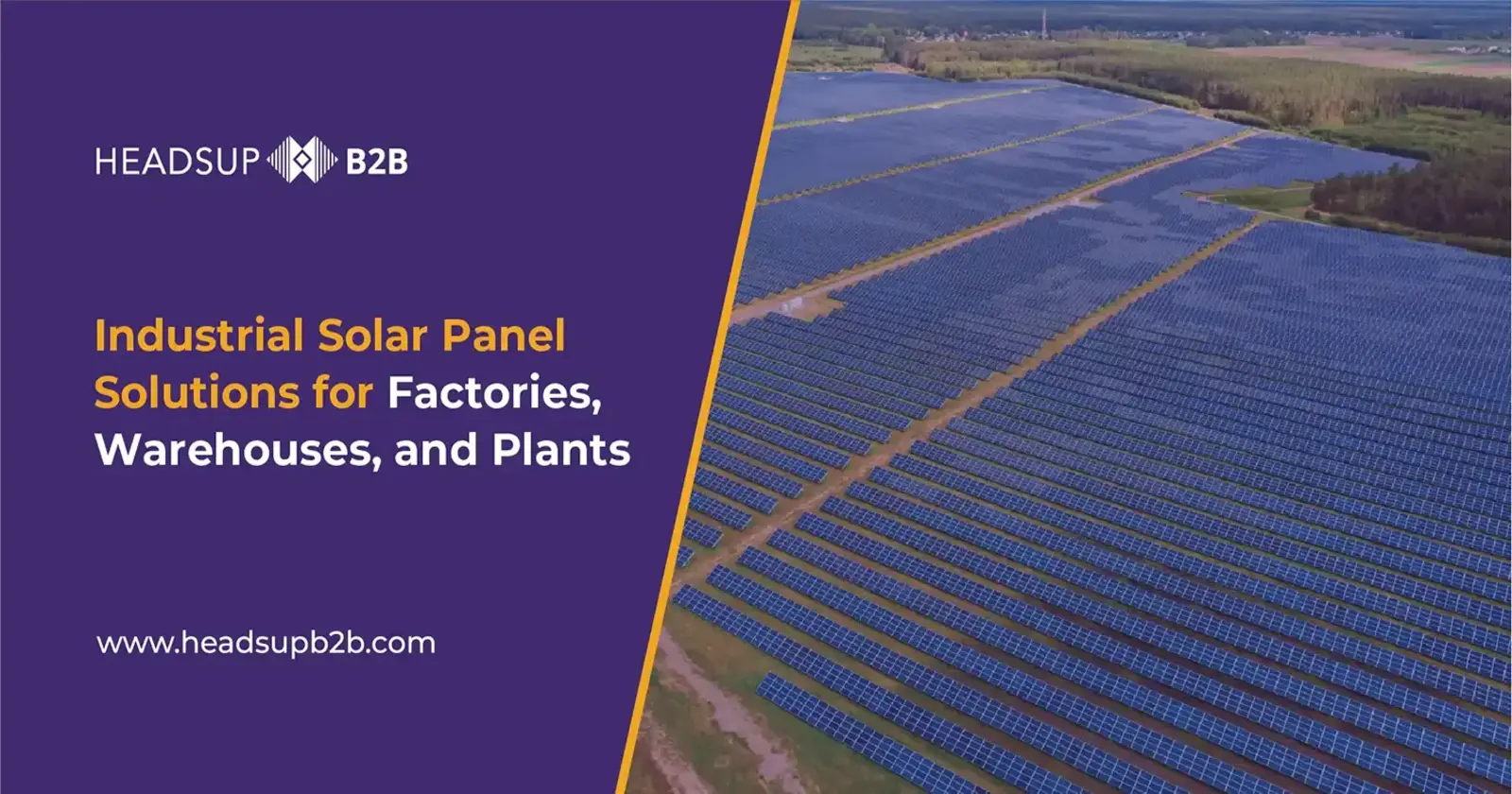
Industrial facilities face some of the highest and most complex energy demands in today’s economy. Factories, warehouses, and manufacturing plants operate long hours, rely on energy-intensive machinery, and are increasingly pressured to reduce operational costs and carbon emissions. Industrial solar panel solutions provide a scalable, reliable, and cost-efficient pathway for meeting these challenges while future-proofing industrial operations.
This comprehensive guide explores how industrial solar power systems are designed, deployed, and optimized for factories, warehouses, and plants, delivering long-term economic and operational advantages.
Why Industrial Facilities Are Turning to Solar Energy
Energy expenses represent a significant portion of operating costs for industrial businesses. Solar energy enables facilities to convert unused rooftop or land space into a productive energy asset.
Core Advantages of Industrial Solar Panels
-
Substantial reduction in electricity costs
-
Protection from utility price fluctuations
-
Improved operational resilience
-
Lower carbon footprint and emissions compliance
-
Enhanced ESG and sustainability performance
By generating power on-site, industrial operations gain control over energy supply while stabilizing long-term costs.
Understanding Industrial Solar Panel Systems
Industrial solar systems are engineered for high power output, continuous operation, and long service life. These installations typically range from 100 kW to multi-megawatt (MW) capacity, depending on facility size and load profile.
We design industrial systems to integrate seamlessly with existing electrical infrastructure while maintaining grid connectivity for reliability and compliance.
Solar Panel Technologies for Industrial Applications
Selecting the right solar panel technology is critical for maximizing output and ROI in industrial environments.
Monocrystalline Solar Panels
Monocrystalline panels offer high efficiency, compact footprint, and excellent performance in limited space, making them ideal for factory rooftops and logistics facilities with high energy density requirements.
Bifacial Solar Panels
Bifacial panels generate electricity from both sides, capturing reflected sunlight from concrete surfaces, rooftops, or ground installations. They are particularly effective for industrial yards, carports, and open-land plants, delivering increased energy yield.
Thin-Film Solar Panels
Thin-film panels are lightweight and flexible, making them suitable for large warehouse roofs with structural load limitations. They also perform well in high temperatures and diffuse light conditions.
Advanced Cell Technologies
Technologies such as PERC, heterojunction (HJT), and TOPCon improve efficiency, durability, and output consistency, making them increasingly popular in modern industrial installations.
System Design for Factories and Manufacturing Plants
Industrial solar systems must align with complex energy consumption patterns.
Load Profiling and Energy Analysis
We analyze production schedules, peak demand cycles, and equipment loads to design systems that offset maximum consumption during operating hours.
Rooftop vs Ground-Mounted Systems
-
Rooftop systems utilize unused factory and warehouse roof space
-
Ground-mounted systems suit plants with available land and higher expansion potential
Hybrid installations often deliver the best balance of scalability and performance.
Solar Inverters and Power Distribution
Industrial systems require robust power conversion and management.
Central Inverters
Central inverters handle large power volumes efficiently, making them ideal for utility-scale and heavy industrial applications.
String Inverters
String inverters provide flexibility, redundancy, and easier maintenance, often used in distributed rooftop systems.
Energy Management Systems
Advanced monitoring platforms track generation, consumption, and system health in real time, enabling performance optimization and predictive maintenance.
Energy Storage for Industrial Solar Systems
Battery storage significantly enhances the value of industrial solar solutions.
Benefits of Industrial Energy Storage
-
Peak demand shaving
-
Backup power for critical operations
-
Load shifting and energy arbitrage
-
Grid support and demand response participation
Lithium-ion battery systems dominate industrial applications due to scalability, long cycle life, and high efficiency.
Warehouses and Logistics Centers: Ideal Solar Candidates
Warehouses and distribution centers are particularly well-suited for solar deployment due to expansive roof surfaces and predictable energy usage.
Key Benefits for Warehouses
-
Daytime energy alignment with solar production
-
Reduced operating costs per square meter
-
Improved sustainability credentials for supply chains
-
Enhanced energy resilience for automated systems
Solar carports and ground arrays further increase capacity without disrupting operations.
Financial Models for Industrial Solar Projects
Industrial solar projects support multiple financing strategies aligned with business objectives.
Capital Ownership (CAPEX)
Full system ownership maximizes long-term savings and asset value.
Power Purchase Agreements (PPAs)
Third-party ownership allows facilities to adopt solar with minimal upfront investment while locking in predictable energy pricing.
Solar Leasing Models
Leasing balances cost reduction with operational flexibility.
Operations, Maintenance, and System Longevity
Industrial solar systems are designed for 25–30 years of operation with minimal degradation.
O&M Best Practices
-
Regular panel cleaning
-
Thermal imaging inspections
-
Inverter and electrical audits
-
Continuous performance monitoring
Proactive maintenance ensures optimal output and protects return on investment.
Compliance, Safety, and Grid Integration
Industrial solar installations must comply with electrical codes, grid interconnection standards, and safety regulations. Proper engineering and commissioning ensure safe operation and seamless integration with utility networks.
Environmental Impact and Corporate Sustainability
Industrial solar panel solutions significantly reduce greenhouse gas emissions and dependence on fossil fuels. These systems support corporate sustainability goals, regulatory compliance, and environmental reporting requirements.
The Future of Industrial Solar Solutions
Advancements in high-efficiency modules, AI-driven energy optimization, and integrated storage technologies are accelerating industrial solar adoption. As electrification increases across manufacturing sectors, solar energy will play a central role in powering next-generation industrial operations.
Conclusion
Industrial solar panel solutions provide factories, warehouses, and plants with a powerful tool to reduce costs, increase energy independence, and meet sustainability targets. With scalable design, advanced technology, and flexible financing, solar energy transforms industrial facilities into resilient, future-ready operations.
By investing in industrial solar power today, businesses secure long-term operational efficiency, environmental leadership, and competitive advantage in an evolving energy landscape.
- Industrial Solar Panel Solutions
- Solar Panel Solutions
Share
