


























Renewable Energy Solutions for Commercial Buildings






Walk into any commercial building today, whether it’s a mall, office complex, or data center, and one thing becomes obvious very quickly: energy consumption is massive. From lighting and HVAC systems to servers and elevators, everything runs on electricity. The demand is not slowing down either. In fact, the buildings sector alone accounts for 31% of global final energy consumption, which is a staggering figure when you think about it. (REN21)
Now add to that the increasing reliance on cooling systems. With rising temperatures across the globe, air conditioning has become one of the fastest-growing energy uses, increasing by about 4% annually. (REN21) This puts immense pressure on traditional energy systems, which are still heavily dependent on fossil fuels.
Here’s where renewable energy steps in. Instead of pulling power from coal or gas-based grids, businesses now have the option to generate clean energy right where they operate. It’s like having your own power plant on your rooftop. That shift doesn’t just reduce dependency on external supply but also brings long-term cost control.
And in a country like India, where electricity demand is growing steadily and expected to cross 2,000 billion units annually, the case for decentralized renewable solutions becomes even stronger. (Press Information Bureau)
Environmental Impact of Traditional Energy
Traditional energy sources come with a heavy environmental price. Coal-fired power plants release massive amounts of carbon dioxide, contributing to global warming. For commercial buildings, which run almost round the clock, this adds up quickly.
Think about a large corporate office operating 12 hours a day. Multiply that across thousands of buildings, and you start to see why the building sector is a major contributor to emissions. The challenge isn’t just energy consumption; it’s how that energy is produced.
Renewable energy changes that equation completely. Solar panels, wind turbines, and geothermal systems generate power without emitting greenhouse gases. This makes them one of the most effective tools for reducing carbon footprints.
More importantly, businesses are now being judged not just on profits but on sustainability. Clients, investors, and even employees expect companies to take environmental responsibility seriously. Renewable energy is no longer optional; it’s becoming a standard.
Current Trends in Renewable Energy Adoption
Global Growth of Renewable Energy
Renewable energy is no longer a niche concept. It’s scaling faster than most people realize. Globally, renewable power capacity is expected to grow by nearly 4,600 GW between 2025 and 2030, which is almost double the growth seen in the previous five years. (IEA)
Solar energy is leading this surge. Lower costs, faster installations, and strong policy support have made it the go-to solution for both residential and commercial users. In fact, solar alone is expected to account for nearly 80% of new renewable capacity additions worldwide. (IEA)
Another interesting shift is cost competitiveness. Around 90% of new renewable projects are now cheaper than fossil fuel alternatives, making the decision easier for businesses focused on cost efficiency. (Reuters)
Adoption in Commercial Real Estate
Commercial real estate is catching up quickly. Buildings equipped with renewable systems are not just energy-efficient but also financially attractive. Studies show that such properties can see value increases of 3–7%, which is a significant boost in a competitive market.
In India, the adoption rate is accelerating even faster. Renewable energy already accounts for nearly 40% of installed power capacity, with solar being the dominant contributor. (India Brand Equity Foundation)
This shift is driven by a mix of factors: rising electricity costs, regulatory pressure, and growing awareness among businesses. It’s no longer just about saving energy; it’s about building future-ready infrastructure.
Types of Renewable Energy Solutions
Solar Power Systems
Rooftop Solar Installations
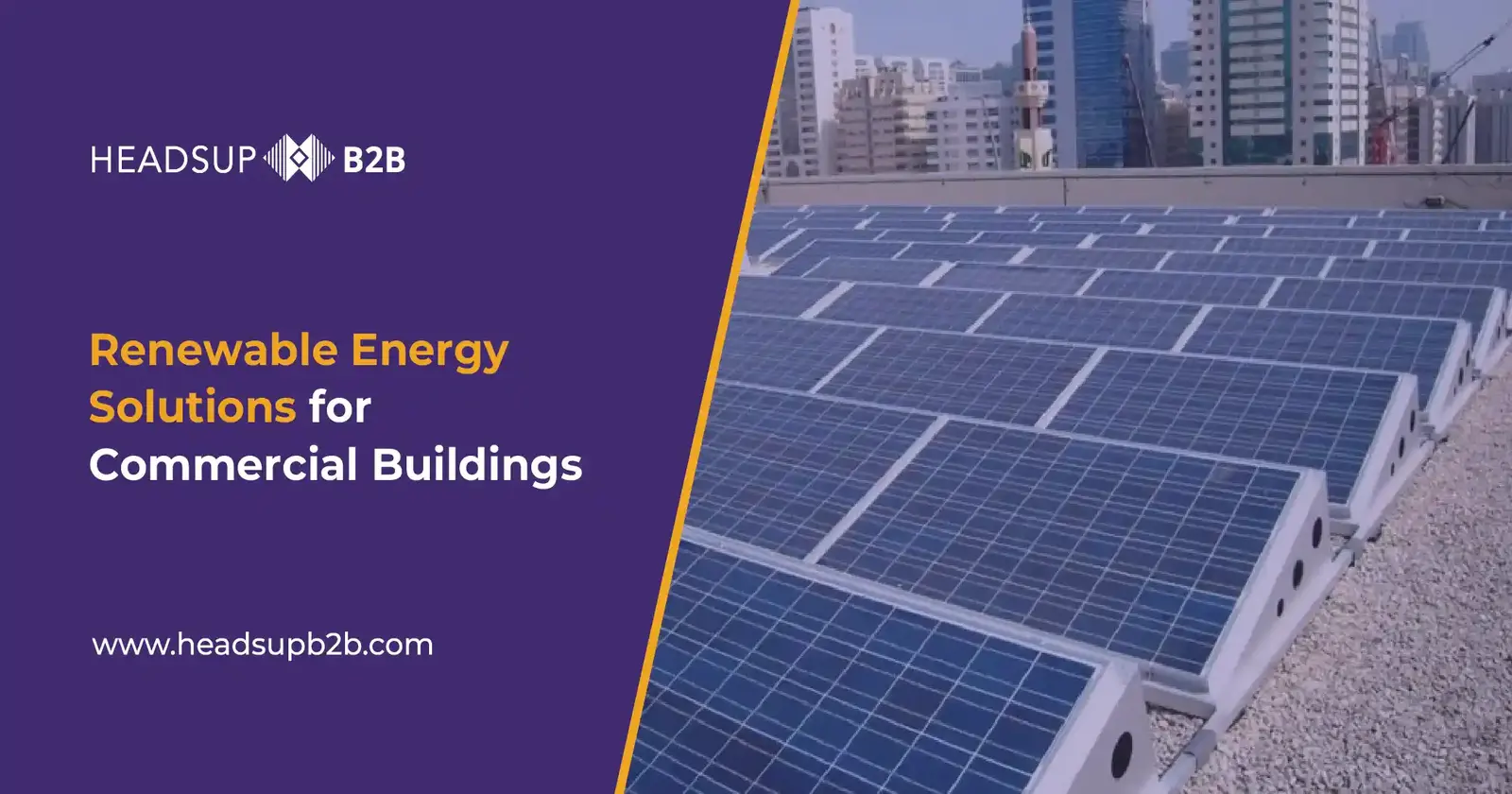
Rooftop solar is the most common entry point for commercial buildings. It’s straightforward, scalable, and works almost anywhere with decent sunlight. Install panels on your roof, connect them to your electrical system, and start generating power.
The beauty of rooftop solar lies in its flexibility. You can start small and expand later as your energy needs grow. For businesses, this means lower upfront risk and gradual investment.
In cities like Delhi, rooftop solar already dominates, contributing nearly 97% of total solar installations, which shows how practical and effective this solution is in urban environments. (SovaSolarLtd. –)
Solar Carports and Facades
Not every building has enough roof space. That’s where solar carports and building-integrated photovoltaics come in. Parking lots can be converted into energy-generating zones, while building facades can double as solar panels.
It’s a clever way to use existing infrastructure without needing additional land. Plus, it adds a modern, tech-forward look to the property.
Wind Energy Solutions
Wind energy is less common in urban commercial settings but works well in industrial zones or large campuses. Small-scale wind turbines can supplement solar systems, creating a hybrid energy model.
While wind depends on location, advancements in turbine design are making it more viable even in moderate wind conditions.
Geothermal Energy Systems
Geothermal systems tap into the earth’s natural heat to regulate building temperatures. Instead of relying heavily on air conditioners or heaters, these systems use underground temperatures to maintain indoor comfort.
They’re highly efficient and work best for large commercial spaces like hotels, hospitals, and campuses. Once installed, operational costs are minimal.
Biomass Energy for Buildings
Biomass uses organic materials like agricultural waste to generate energy. For commercial buildings located near industrial or agricultural zones, this can be a practical option.
It’s not as widely used as solar, but it adds diversity to the renewable mix and helps manage waste effectively.
Energy Storage and Smart Systems
Battery Storage Systems
Generating renewable energy is one part of the equation. Storing it is equally important. Solar panels produce power during the day, but what happens at night?
Battery storage systems solve this problem. They store excess energy and release it when needed, ensuring a steady power supply. With battery costs dropping significantly over the years, this technology is becoming more accessible.
Smart Energy Management Systems
Smart systems act like the brain of your energy setup. They monitor usage, optimize performance, and reduce waste. Imagine a system that automatically adjusts lighting and cooling based on occupancy. That’s what smart energy management does.
For commercial buildings, this means better efficiency without manual intervention.
Benefits of Renewable Energy for Businesses
Cost Savings and ROI
Let’s talk numbers. Electricity bills are one of the biggest operational expenses for commercial buildings. Renewable energy reduces that burden significantly.
Once installed, systems like solar panels generate free electricity for years. Over time, the savings often outweigh the initial investment, making it a financially sound decision.
Increased Property Value
Buildings with renewable systems are more attractive to tenants and investors. They offer lower operating costs and align with sustainability goals.
As mentioned earlier, property values can increase by up to 7%, which is a strong incentive for developers.
Brand Image and Sustainability Goals
Consumers today care about sustainability. Businesses that invest in renewable energy send a strong message: they are responsible and forward-thinking.
This improves brand perception and can even influence purchasing decisions.
Challenges in Implementation
Initial Investment Costs
The biggest barrier is the upfront cost. Installing solar panels or geothermal systems requires significant capital. While long-term savings are attractive, not every business is ready to make that initial investment.
However, financing options and leasing models are making it easier to adopt these technologies.
Infrastructure and Space Constraints
Urban buildings often face space limitations. Not every structure has enough rooftop area for solar panels.
In such cases, creative solutions like solar facades or off-site renewable sourcing become important.
Future of Renewable Energy in Commercial Buildings
Technological Innovations
Technology is evolving rapidly. From more efficient solar panels to advanced battery storage, the future looks promising.
We’re also seeing integration with smart grids and electric vehicles, creating a connected energy ecosystem.
Net-Zero Commercial Buildings
Net-zero buildings generate as much energy as they consume. This concept is gaining traction globally.
In India, examples like government buildings achieving net-zero status show that this is not just theory but a practical reality.
Conclusion
Renewable energy in commercial buildings is no longer a trend; it’s becoming the standard. With rising energy demand, cost pressures, and environmental concerns, businesses are actively shifting toward cleaner solutions.
Solar, wind, geothermal, and smart systems are reshaping how buildings consume and generate energy. While challenges exist, the long-term benefits far outweigh them.
The shift is already happening. The question is not whether businesses will adopt renewable energy, but how quickly they will do it.
Frequently Asked Questions
Share
