

























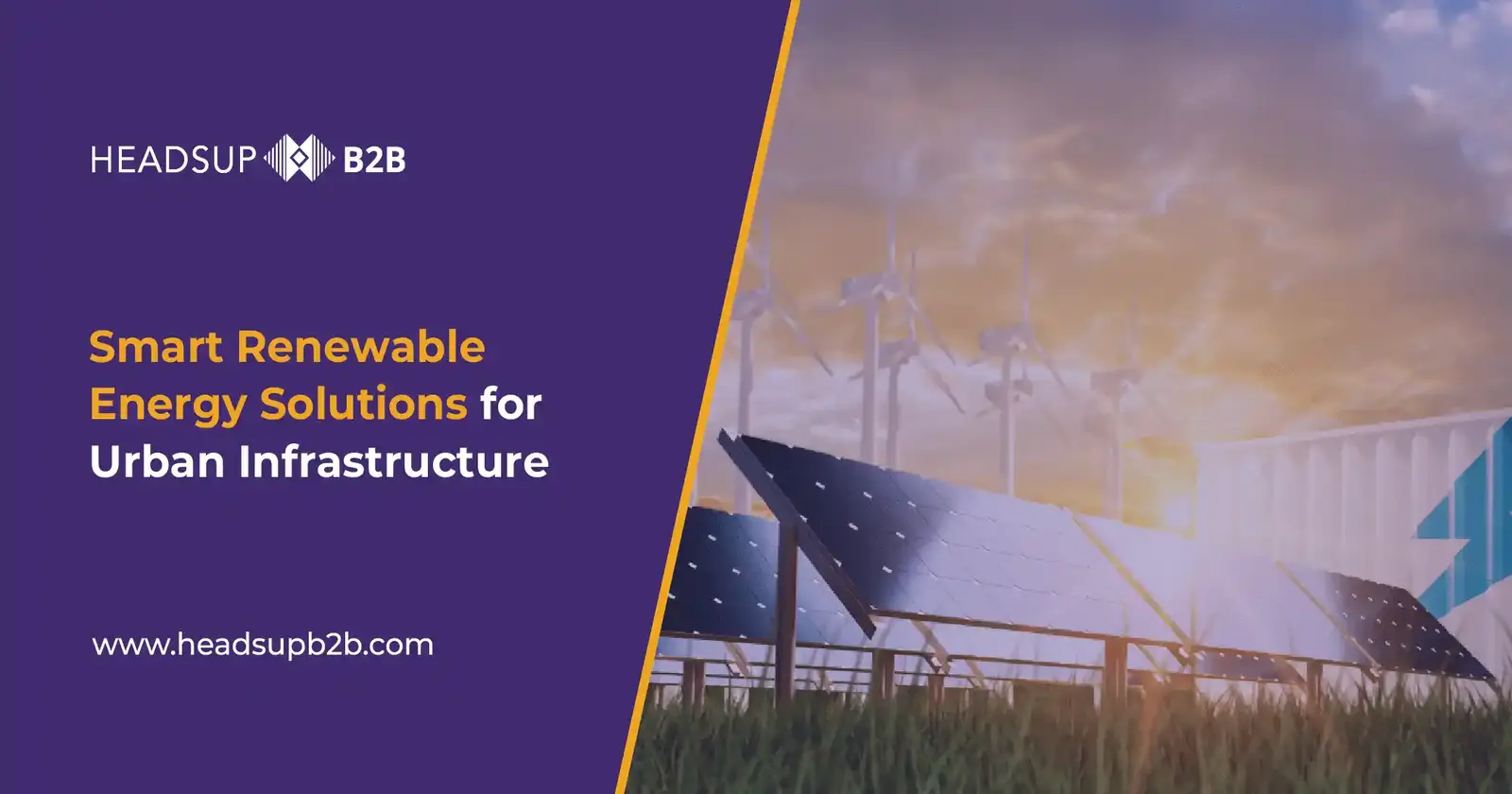
Smart Renewable Energy Solutions for Urban Infrastructure






Rising urban population and energy demand
Cities are growing at a pace that’s hard to ignore. Right now, urban areas already consume nearly 75% of global energy and produce around 80% of carbon emissions (ScienceDirect). That alone explains why energy systems built decades ago are starting to struggle. Now add projections that nearly 68% of the global population will live in cities by 2050, and you begin to see the scale of the challenge.
Think about it like this. Every new apartment, metro line, data center, and shopping complex adds pressure to the same grid. Traditional infrastructure wasn’t designed for this kind of density or demand spikes. It’s not just about producing more electricity; it’s about managing it intelligently.
What makes things even more complicated is the shift in how energy is used. Cities now rely heavily on tech-driven services like cloud computing, electric mobility, and connected devices. These aren’t constant loads. They fluctuate wildly throughout the day. That’s where smart renewable systems come into play. They don’t just supply energy; they adapt, predict, and respond in real time.
Environmental and economic pressures
Urban infrastructure isn’t just dealing with demand. It’s also under pressure to cut emissions and control costs. Governments and businesses are facing stricter sustainability targets, and energy prices are becoming unpredictable due to global market fluctuations.
At the same time, renewable energy is no longer just an environmental choice. It’s becoming economically viable. In India alone, renewable capacity has crossed 200+ GW and continues to grow rapidly toward a 500 GW target by 2030 (– Result Oriented | Service Driven). That shift is changing how cities plan infrastructure investments.
Smart renewable solutions offer a way to hit both goals. They reduce dependency on fossil fuels while improving efficiency. Instead of wasting energy during low-demand periods or facing shortages during peaks, cities can balance supply and demand using real-time data. That’s the difference between a reactive system and an intelligent one.
What Defines Smart Renewable Energy
Integration of renewables with intelligent systems
Renewable energy on its own isn’t enough. Solar panels and wind turbines generate power, but they don’t solve the problem of unpredictability. What makes energy “smart” is the integration of these sources with advanced control systems.
A smart renewable setup connects energy generation, distribution, and consumption into one coordinated network. It uses sensors, analytics, and automation to ensure energy flows where it’s needed most. Instead of a one-way system where power moves from plant to consumer, you get a dynamic, two-way interaction.
For example, a building with solar panels can generate excess electricity during the day and feed it back into the grid. At night, it can draw power when needed. Multiply this across thousands of buildings, and you get a decentralized energy ecosystem that’s far more resilient than traditional grids.
Role of IoT, data, and automation
The real engine behind smart energy systems is data. Sensors embedded across infrastructure track everything from energy usage patterns to weather conditions. These insights allow systems to make decisions in real time.
Imagine a city where streetlights dim automatically when there’s no traffic, or where HVAC systems adjust based on occupancy. That’s not futuristic anymore. It’s already happening in smart cities.
According to recent projections, the global smart cities market is expected to reach over $1.4 trillion by 2030, driven largely by data-driven infrastructure (MarketsandMarkets). This growth shows how critical automation and connectivity have become.
Core Technologies Powering Smart Energy Infrastructure
Smart grids and decentralized energy networks
Traditional grids operate like a one-way highway. Energy flows from centralized power plants to consumers. Smart grids flip this model. They allow energy to move in multiple directions, integrating renewable sources at every level.
This means households, businesses, and even vehicles can act as both consumers and producers. These systems continuously monitor demand and adjust supply accordingly. If one area experiences a spike, the grid redistributes energy instantly.
Smart grids also improve reliability. Instead of large-scale outages, issues can be isolated and resolved quickly. That’s a massive advantage in dense urban environments where downtime can disrupt entire economies.
Energy storage innovations
Renewable energy has one big limitation: it’s not always available. Solar doesn’t work at night, and wind isn’t constant. That’s why storage is a critical piece of the puzzle.
Recent developments in battery technology are changing the game. In 2025 alone, global battery storage deployment saw record growth, with tens of gigawatt-hours added to support renewable integration (Reuters).
Beyond traditional lithium-ion batteries, newer solutions like flow batteries and iron-air systems are emerging. These can store energy for longer periods, making it possible to balance supply over days rather than hours.
Solar Energy in Urban Ecosystems
Rooftop solar and building-integrated systems
Walk through any modern city, and you’ll start noticing solar panels popping up everywhere. Rooftop solar has become one of the most accessible renewable solutions for urban areas.
But it’s not just about placing panels on roofs anymore. Building-integrated photovoltaics (BIPV) are turning entire structures into energy generators. Windows, facades, and even shading systems can now produce electricity.
This approach solves one of the biggest challenges in cities: space. Instead of requiring large land areas, energy generation becomes part of existing infrastructure.
Solar-powered public infrastructure
Cities are also embedding solar into public systems. Streetlights, bus stops, traffic signals, and even surveillance systems are being powered by solar energy.
This reduces dependency on centralized grids and ensures critical services remain operational even during outages. It also cuts operational costs significantly over time.
Wind and Hybrid Renewable Systems in Cities
Micro wind turbines
While large wind farms are usually located outside cities, smaller turbines are finding their way into urban settings. These micro turbines can be installed on rooftops or integrated into buildings.
They work well in areas with consistent wind flow, such as coastal cities or high-rise clusters. While they don’t generate as much power as large turbines, they contribute to localized energy production.
Hybrid solar-wind systems
Combining solar and wind creates a more balanced energy system. When one source underperforms, the other can compensate. This reduces dependency on storage and improves reliability.
Hybrid systems are particularly useful for critical infrastructure like hospitals, data centers, and transportation hubs.
Role of Energy Storage in Smart Cities
Battery storage systems
Battery systems act as a buffer between energy generation and consumption. They store excess energy during low-demand periods and release it when needed.
This helps smooth out fluctuations and ensures a steady supply. It also allows cities to reduce reliance on backup fossil fuel generators.
Long-duration energy storage
A newer trend gaining traction is long-duration energy storage. These systems can store energy for extended periods, sometimes even days.
This is crucial for maintaining stability during prolonged low-generation periods. It also supports the transition to fully renewable grids by reducing dependency on conventional power sources.
Electric Mobility and Renewable Integration
EV charging infrastructure
Electric vehicles are becoming a core part of urban mobility. But charging them sustainably requires integrating renewable energy into the system.
Smart charging stations can adjust charging speeds based on grid conditions. They can also use stored renewable energy to reduce peak load pressure.
Smart transport energy systems
Urban transport systems are also evolving. Electric buses, metro systems, and even roads with embedded charging technology are being tested.
These systems don’t just consume energy; they interact with the grid. For example, parked EVs can feed energy back into the system during peak demand.
Smart Buildings and Energy Efficiency
Green building design
Buildings account for a significant portion of urban energy consumption. Smart designs focus on reducing this demand through better insulation, natural lighting, and efficient materials.
These designs minimize the need for artificial heating and cooling, cutting energy usage significantly.
Automated energy management
Automation takes efficiency a step further. Smart systems monitor usage patterns and adjust energy consumption in real time.
This ensures energy is used only when needed, reducing waste and lowering costs.
Benefits of Smart Renewable Infrastructure
Smart renewable systems offer multiple advantages:
| Benefit | Impact |
| Energy efficiency | Reduces waste and optimizes usage |
| Cost savings | Lower operational expenses over time |
| Sustainability | Cuts emissions significantly |
| Reliability | Minimizes outages and disruptions |
| Scalability | Adapts to growing urban demands |
Cities adopting these solutions are seeing improvements not just in energy performance but also in overall quality of life.
Challenges and Future Outlook
Despite the progress, challenges remain. High initial costs, regulatory complexities, and infrastructure limitations can slow adoption. Integrating multiple technologies into existing systems isn’t always straightforward.
However, the momentum is strong. The smart infrastructure market is projected to reach over $1.5 trillion by 2030, showing how rapidly this space is evolving (Yahoo Finance).
Looking ahead, the focus will shift toward more decentralized and resilient systems. Cities will rely less on centralized power plants and more on distributed energy networks. Technologies like digital twins, predictive analytics, and advanced storage will play a major role.
Conclusion
Urban infrastructure is at a turning point. The traditional way of generating and distributing energy is no longer sufficient for modern cities. Smart renewable solutions offer a practical path forward by combining sustainability with efficiency.
Instead of treating energy as a static resource, cities are starting to manage it as a dynamic system. This shift is what will define the next generation of urban development. The cities that adopt these systems early will be better equipped to handle future challenges, both environmental and economic.
Frequently Asked Questions
Share
